‘The Imaginary landscape of the Komagata Maru’- Visions of the Living past
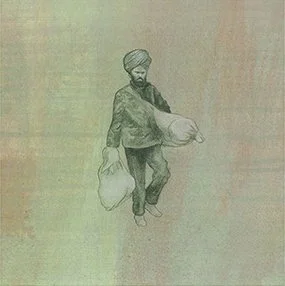
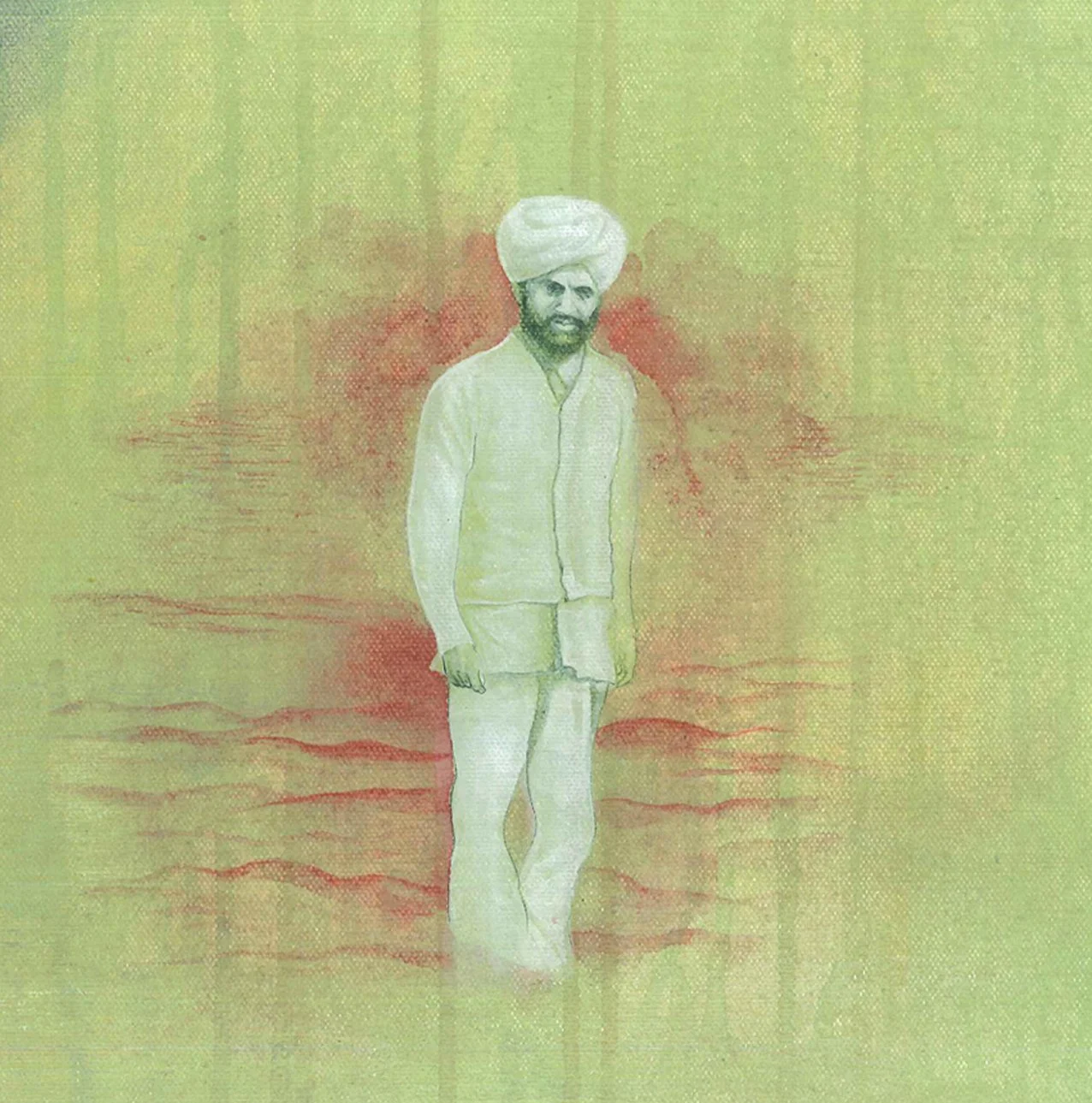
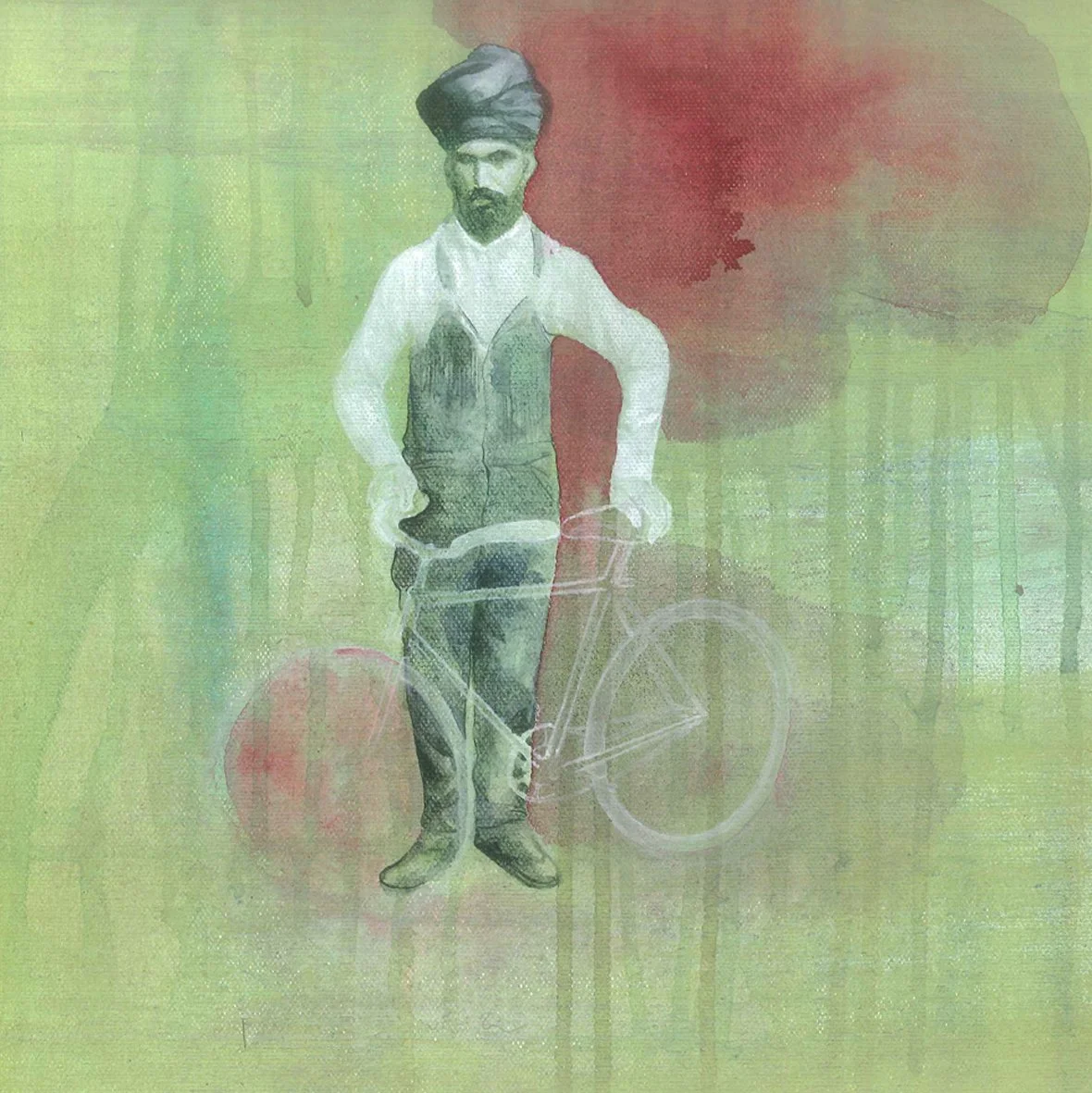
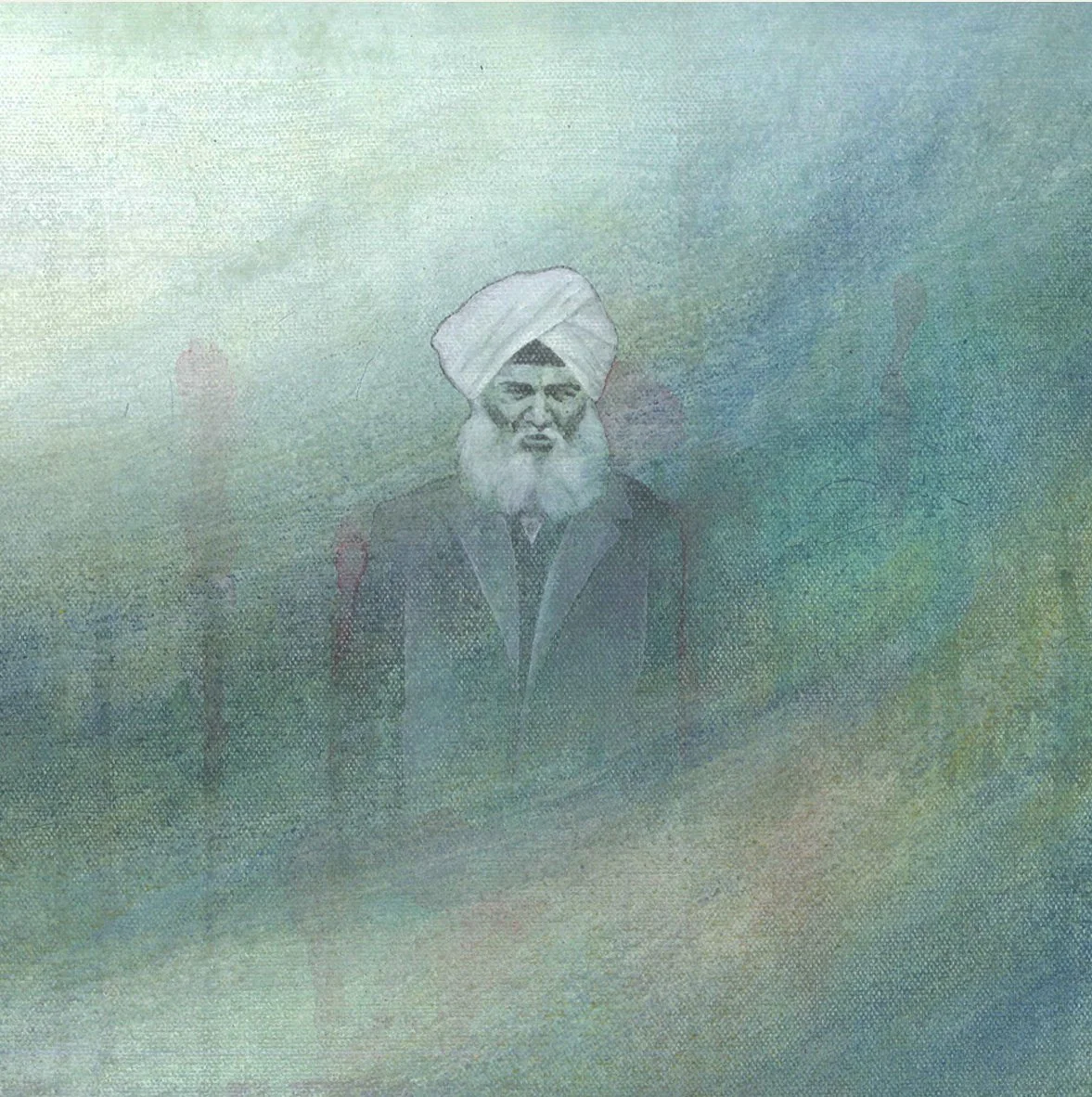
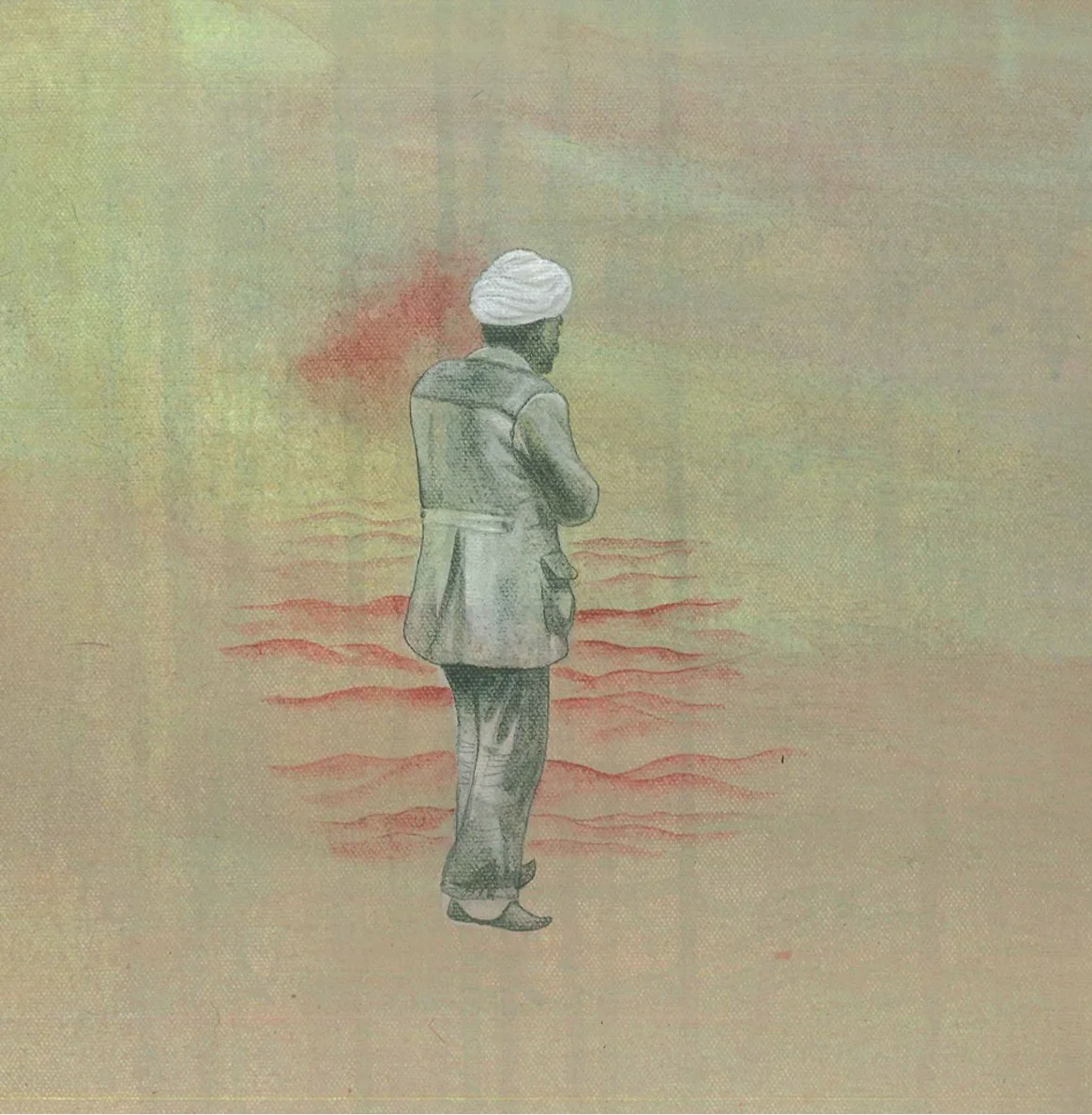
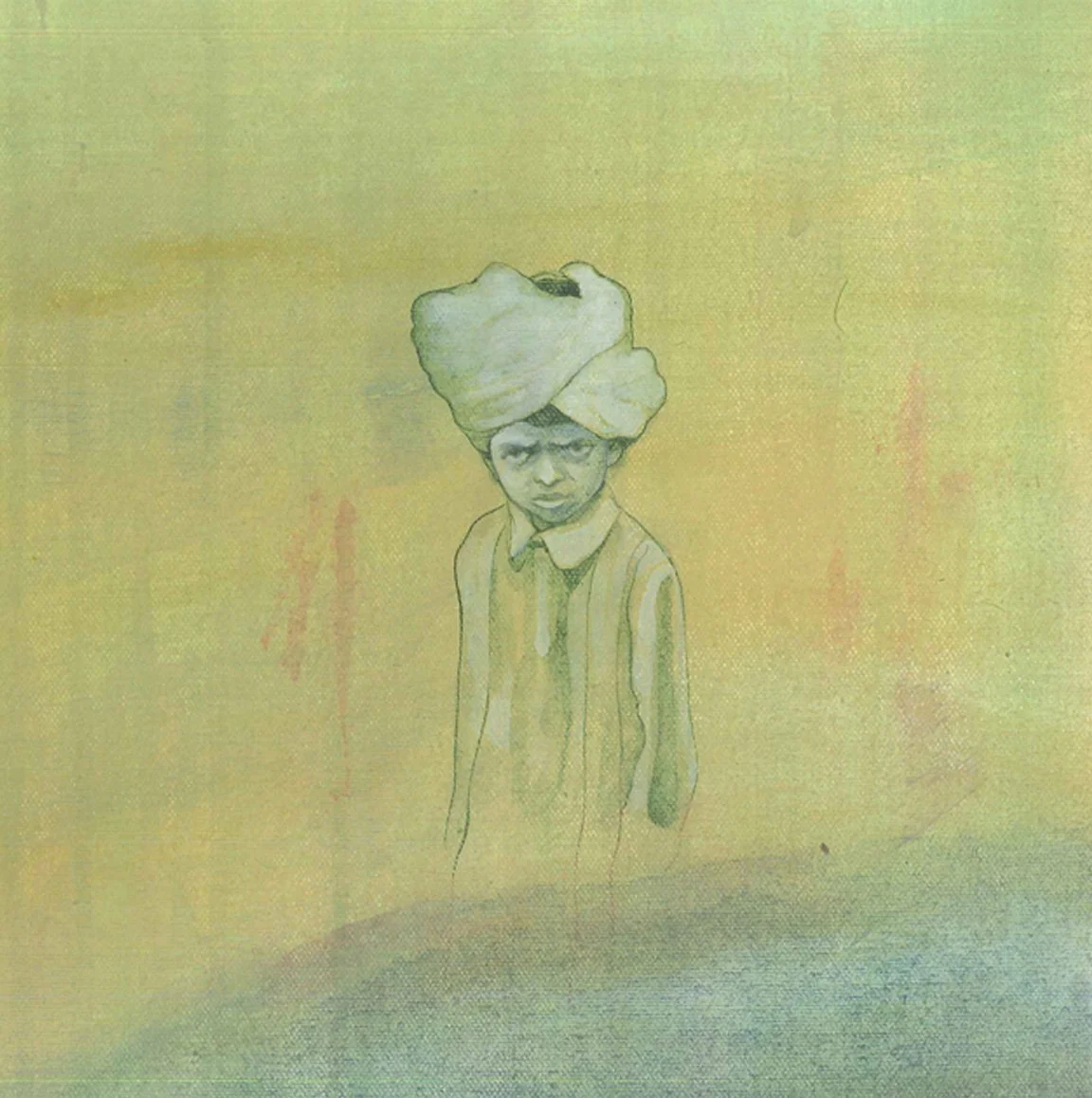
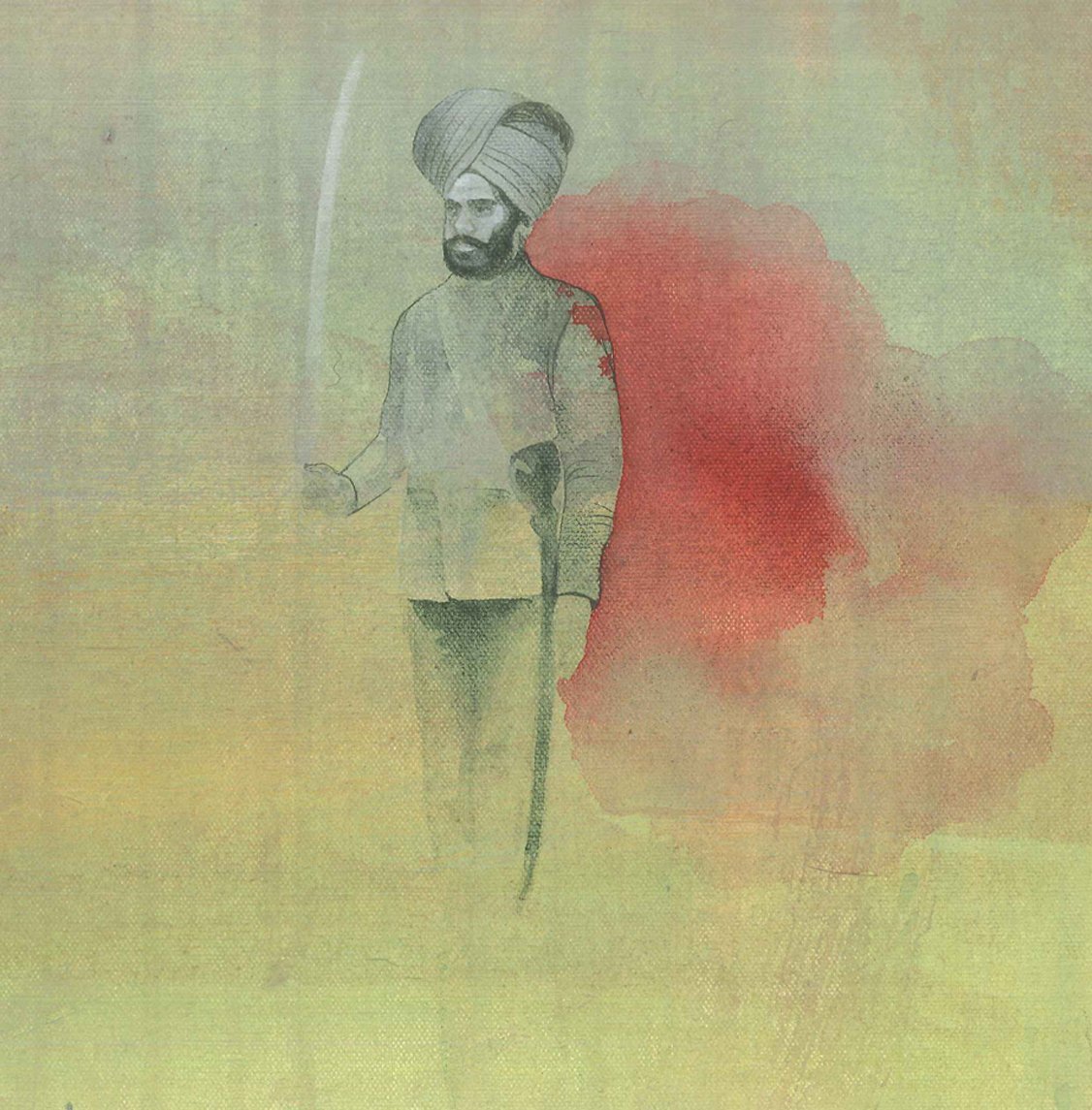
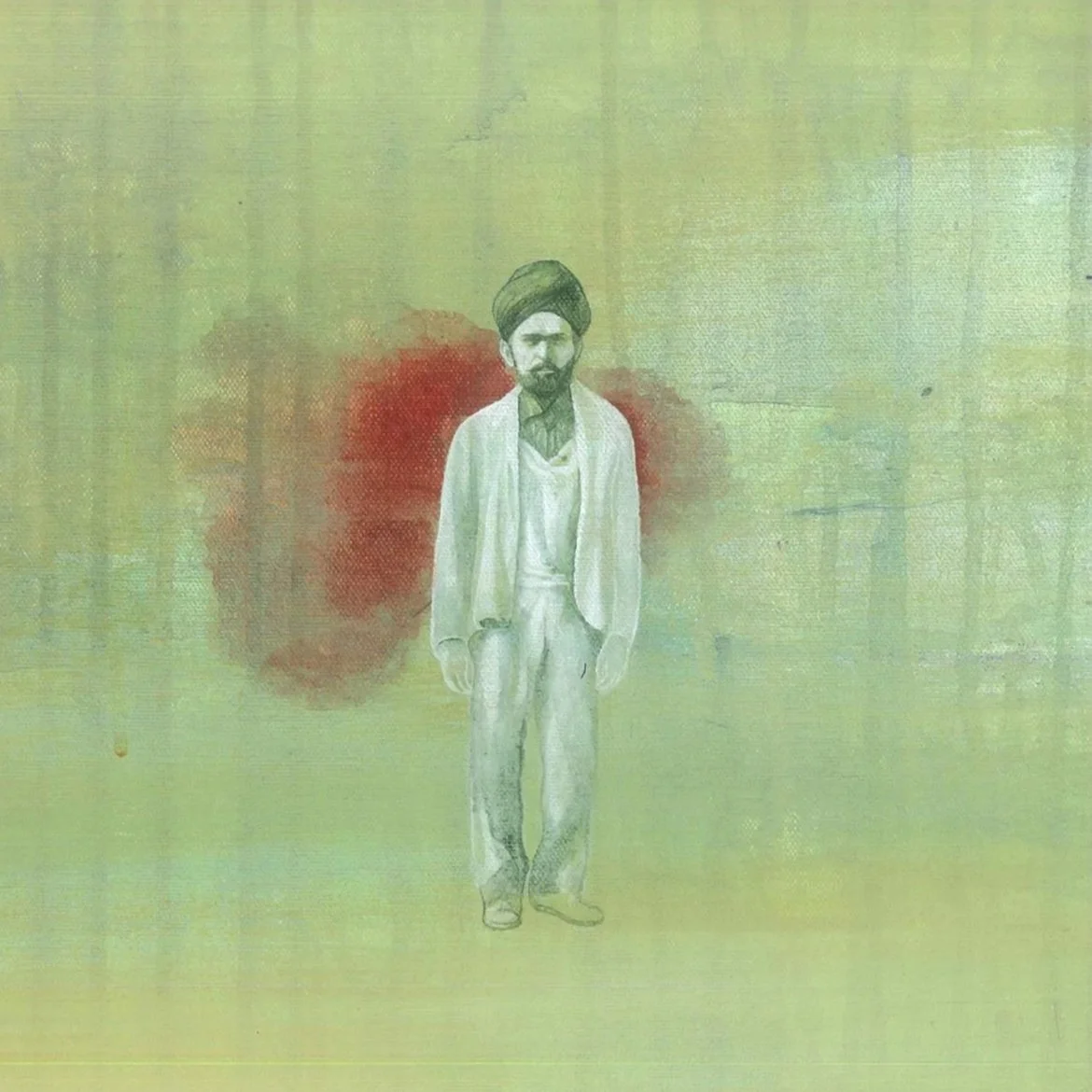
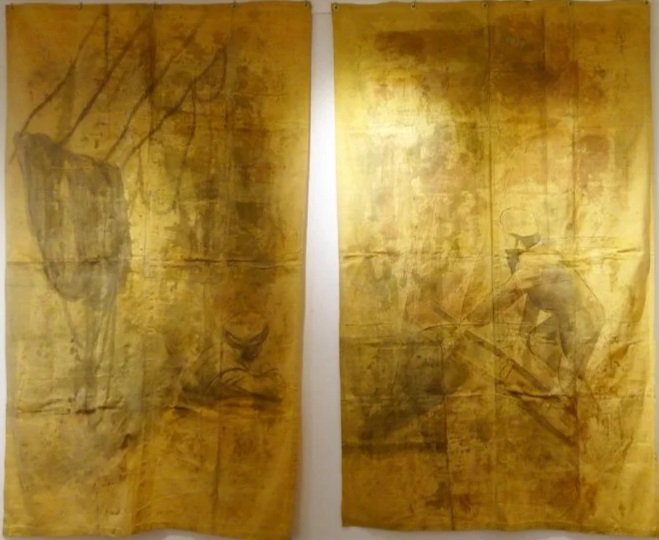
This set of paintings, small-sized paintings in acrylic on canvas and two larger images in acrylic on cloth tarpaulin, represent the effort to bring together processes, surfaces and imageries that are not always seen together. The tarpaulin serves as a metaphor for migration – life on the move. The surface for the small paintings is canvas – coarse and richly layered with paint. The main figures in the paintings are small and centrally placed, frozen in a kind of formal pose, with intentionality, reminiscent of miniature portraiture. Yet the medium is acrylic, and the images are not of kings and elites, but of Sikh laborers in North America in the early twentieth century. We might think we know such images, the kind of thing we’d find in archives and libraries, in ethnographic collections: unnamed men, facing the camera, silent and serious, but obviously recently toiling in the fields or in mills. Here, they stand out in a different way: monumental, perhaps even regal. Singular. All attention is on them, attractive but unsettling; they look out at the viewer as if asking a question. They demand that we answer them, to account for ourselves, and for them. The splash of red behind each colours this accounting.